
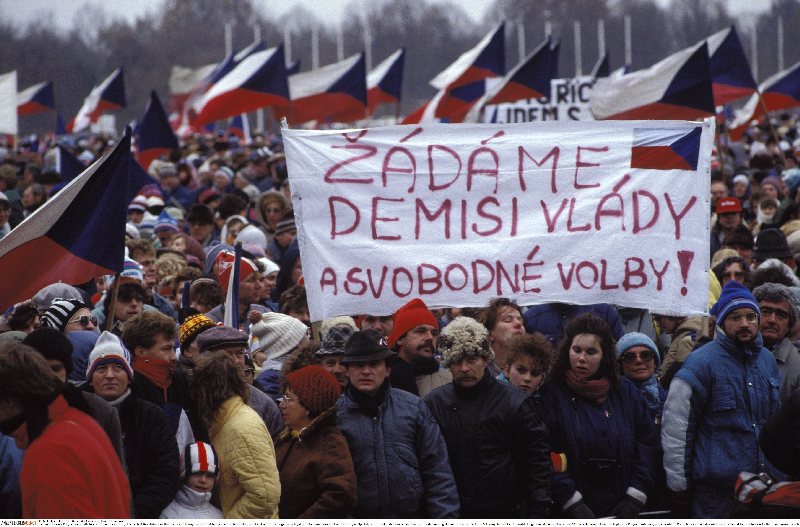
Jan Opletal was a third-year medical student at Charles University in Prague when Hitler and the Nazis invaded Prague on March 15, 1939. Later that year, on October 28, the anniversary of the founding of democratic Czechoslovakia, thousands of people, including Opletal and hundreds of students from Charles University, gathered near Wenceslas Square to protest Nazi occupation. The Nazi police opened fire on the crowd, killing bakery worker Václav Sedláček and Opletal.
More than 3,000 students attended Opletal’s November 15 memorial. Nazis raided university dormitories two days later, November 17, 1939, executing nine student union leaders and sending 1,200 students to concentration camps. Nazis closed all Czech universities and student organizations, and they would remain closed until Prague’s 1945 liberation.
In 1941, November 17 was declared International Students’ Day in memory of Opletal and other students who were subsequently killed.
Decades later, November 17, 1989, rallies commemorating the 50th anniversary of the 1939 Nazi raid on universities turned into a demonstration demanding democratic reforms. Prime Minister Ladislav Adamec was forced to hold talks with the Civic Forum, which was led by still-dissident (soon to be President) Vaclav Havel. The Civic Forum demanded the resignation of the communist government, the release of prisoners of conscience, and investigations into the November 17 police action.
Meet the Guests:
 Monika MacDonagh-Pajerová is a Czech activist, university teacher and former diplomat. She was the leading personality from the 1989 Velvet Revolution and chairperson of the pro-European organization ANO pro Evropu (YES for Europe) which campaigned for Czech membership of the European Union and higher public understanding of European issues.
In 1989, Monika was a Student Leader, and subsequently Diplomat and Cultural Attaché in the Ministry of Foreign Affairs at the Embassy in Paris and in the Council of Europe in the Cultural Committee in Strasbourg. She was also Head of the Press Dept. and Spokesperson of the Ministry of Foreign Affairs in the headquarters in Prague.
 Boris Strečanský was active in the student movement in Slovakia in 1989 and joined President Havel’s delegation to its official visit to the U.S. and Canada in February 1990. He was opening study opportunities for students from Czechoslovakia in the East Coast universities.
He holds a degree in Philosophy and History from Comenius University in Bratislava (1991) and an MPP degree from the School of Public and International Affairs at Princeton University (2019). His professional work since the 1990s has been focused on civil society development and its resourcing, both domestically and internationally. In 2002, he co-founded the Center for Philanthropy in Slovakia, where he is a senior fellow and member of the Board. Boris has professional experience in institution-building, learning and development, and local resource mobilization for civil society in Europe, Eurasia, Southeast Asia, and Africa.
Meet the Hosts:
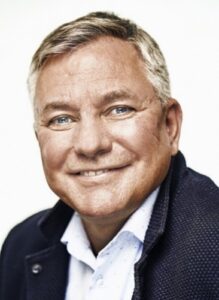 Miroslav (Mirek) Konvalina is a seasoned public diplomacy professional with extensive experience in the Czech Republic and the U.S. He served as director of Czech Center New York and led the American Center at the U.S. Embassy in Prague for seven years. Konvalina studied journalism in both countries and holds a degree in economics. He has worked in government communications, as a Czech Radio correspondent in Washington, D.C., and as director of Czech Radiojournal. He also held a marketing leadership role at Newton Media. An author, documentarian, and curator, Konvalina has hosted a talk show in Prague and is fluent in Czech, English, Russian, and basic German.
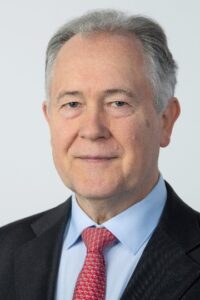 Pavol Demeš is an independent foreign policy analyst, civil society expert, photographer, and TV anchor based in Bratislava, Slovakia. Before the 1989 Velvet Revolution, he was a biomedical researcher at Comenius University. He later served as executive director of the Slovak Academic Information Agency, Slovakia’s minister of international relations (1991–1992), and foreign policy adviser to the president (1993–1997). From 2000 to 2010, he directed Central and Eastern Europe programs at the German Marshall Fund of the United States. He hosted a TV program on international relations for TASR and has authored numerous works on civil society and diplomacy.
About the Series:
Voices of the Homelands Webinar is presented by the National Czech & Slovak Museum & Library with hosts Dr. Pavol Demeš and Miroslav Konvalina. The bi-monthly webinar is available free to the public on Zoom. Future topics include the 80th anniversary of the end of World War II, Czech Parliamentary elections, the Cleveland Agreement, and International Students’ Day. The webinar is free and open to the public. During the virtual discussion, viewers are encouraged to participate in the conversation by submitting questions.
To watch previous webinars, visit https://ncsml.org/voices-homelands